Season guide · July 15, 2026
Texture: the surface your eyes can touch
the stil editorial team · 2 min read
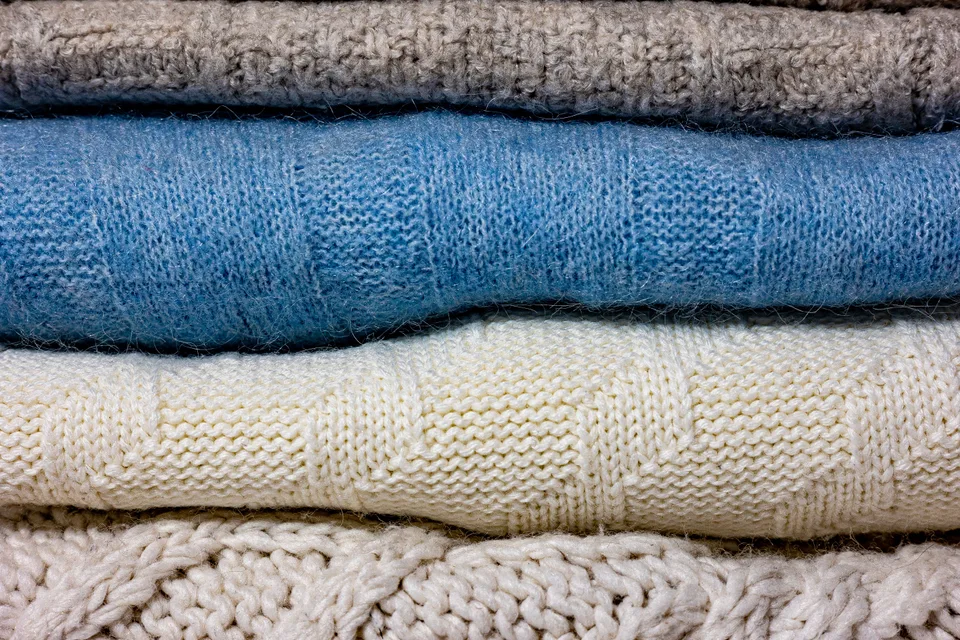
None of the four sweaters here carries a pattern, and yet no two of them look alike. The nubby surface of the bouclé, the fine haze of fuzz on the blue one, the cream's neat rows of stitches, the raised cables at the bottom of the stack: each says something color alone cannot. That is what texture is: the surface of a fabric your eyes can touch. Before your hand ever reaches out, you already know whether a sweater will be soft or coarse, warm or cool.
This is why texture deserves as much attention as color when you build a wardrobe. Two pieces can share the exact same shade, but if one absorbs light and the other reflects it, side by side they create something else entirely. This guide looks at three basic behaviors of texture: its relationship with light, its use in contrast, and the depth it builds within a single color.
The reflectors: one square of satin
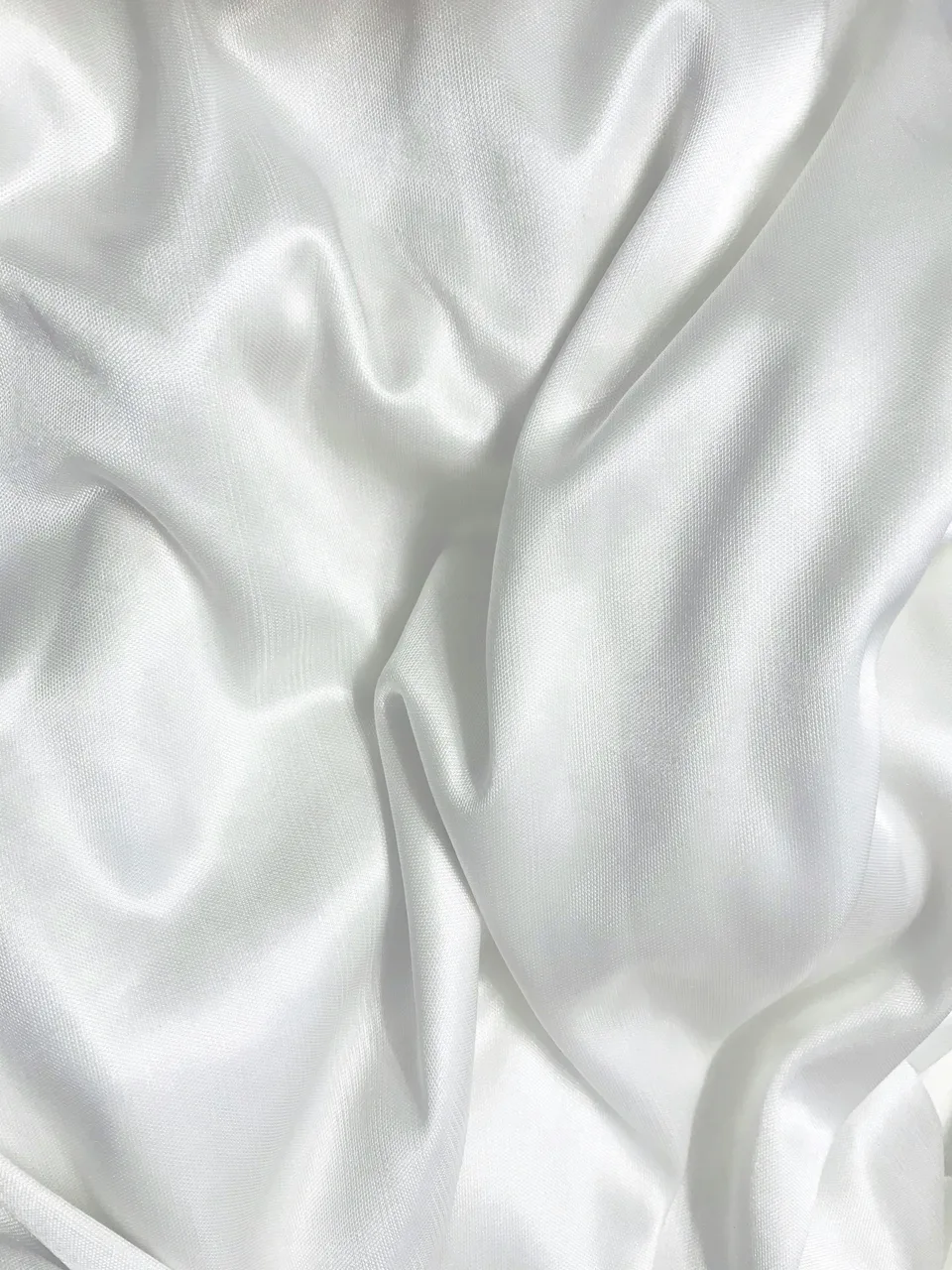
There is almost no color in this square of white satin; the whole story is light. Every fold throws off its own highlight, every hollow its own shadow. As the satin moves, the picture changes with it. This is why a satin piece looks still in a photograph and alive on the body. It is also why the dose matters: when an entire outfit shines, the eye has nowhere to rest. The classic use of satin is exactly this: one glowing surface among matte pieces.
Rough next to smooth
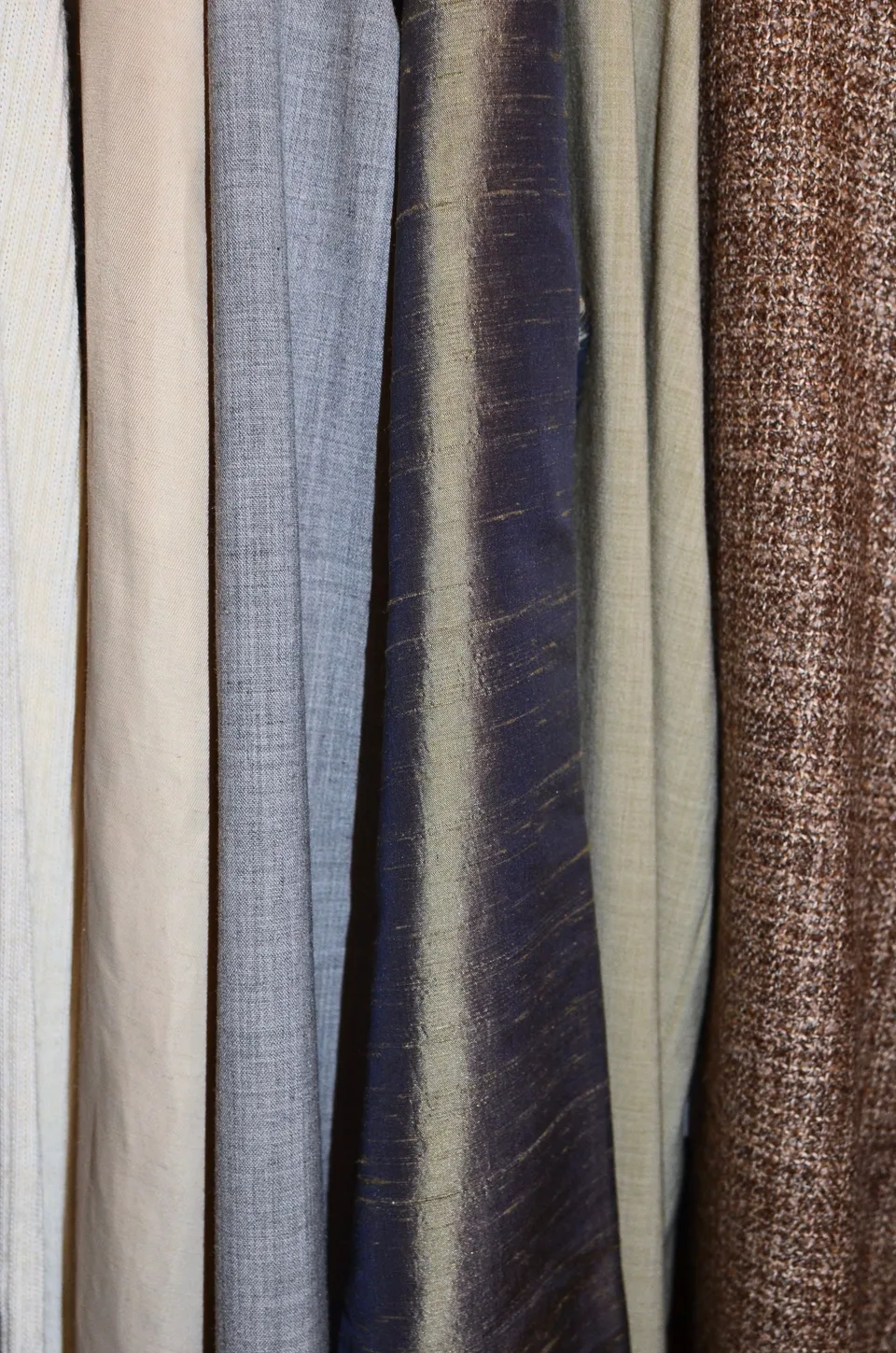
Six fabrics hang in this row: ribbed knit, plain cotton, soft wool, striped raw silk, fine crepe, nubby tweed. The colors are already related; what actually speaks here is the surfaces. The raw silk's glossy stripes stand out as the smoothest of the six; the tweed scatters the light most and looks the most hand-worked. One of the most-used formulas of a good outfit brings those two ends together: a smooth shirt under a rough jacket, a fluid skirt with a chunky knit. Contrast makes both pieces read more clearly.
One color, five textures
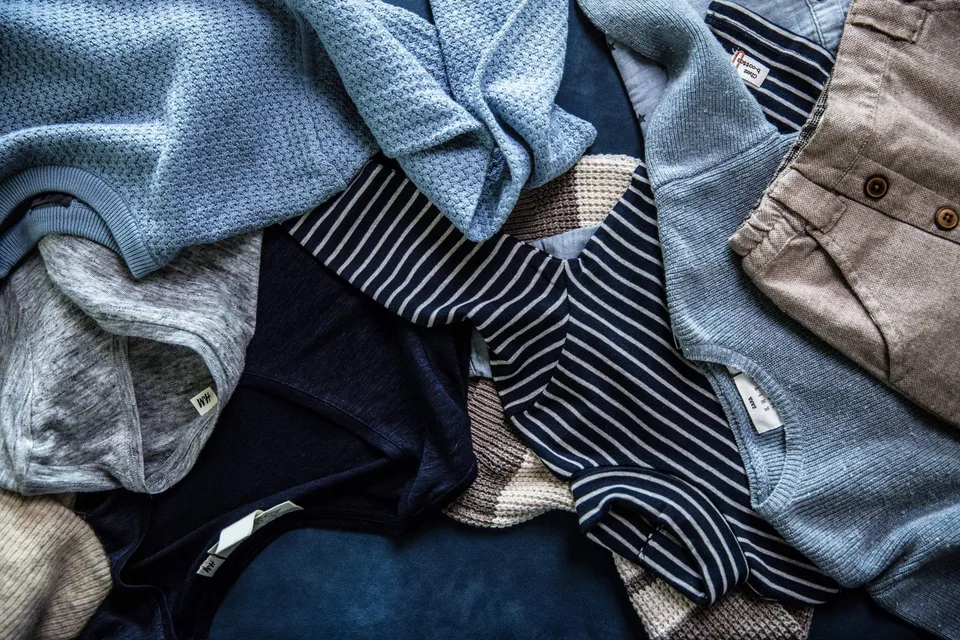
There is barely any color contrast in this all-blue flat lay, and still the picture is anything but flat. The honeycomb knit's raised surface, the graphic stripes, the flecked marl, the linen's dry hand: together they work like five voices from the same family. Here is the secret of dressing in one color: as color decreases, texture has to multiply. A head-to-toe navy outfit reads as rich the moment it carries at least two different surfaces. The same is true for beige, and for black.
- texture
- fabric
- basics
Photo: Aliaksei Semirski / Pexels · Rue S / Unsplash · Skylar Kang / Pexels · Edvinas Jakunskas / Pexels